Fly Line Buying Guide

Choosing a fly line for your rod, your water, your fish.

The right line transforms a rod. The wrong one makes even a great rod feel dead. Start with your rod's action, then narrow by what you're fishing for. That's the order we work through it at the shop counter.

Prefer to talk it through? Call the shop at (605) 341-2450 — Mon–Sat 9–5 MT.
Let us help you pick the right fly line

First time buying a fly line?

Here's the short version: pick a line that matches the number on your rod (a 5-weight rod takes a 5-weight line), and roughly the type of fishing you do most. If you don't know more than that, the line below is the right answer for most anglers. Two alternatives are listed for common situations where a different line is the better call.
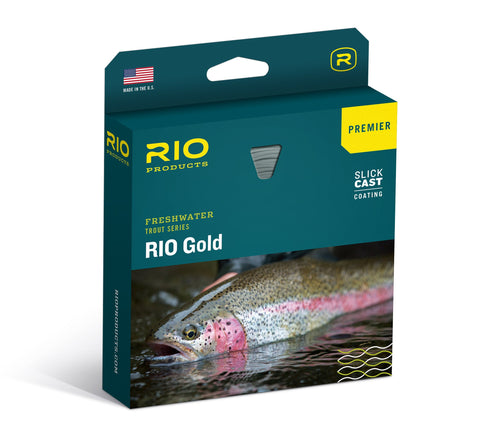
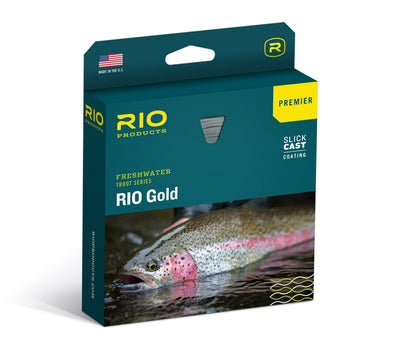
Premier Rio Gold Fly Line
Our top recommendation
Premier Rio Gold Fly Line
$99.99 — available in 3 wt through 8 wt

The line we sell more of than any other. Long head, smooth coating, fits most modern rods. Buy it, fish it, you won't regret it.
Two alternatives worth knowing:
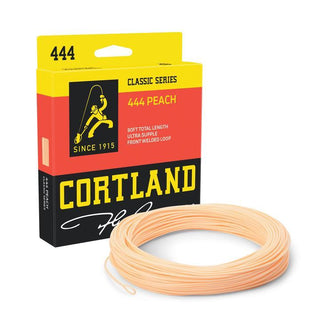
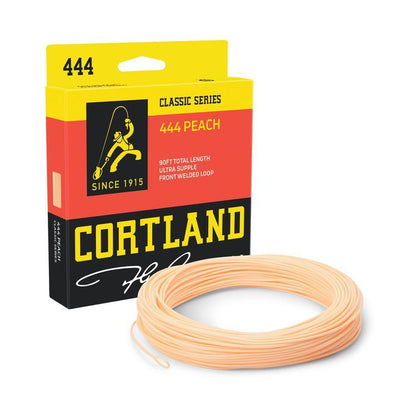
Cortland 444 Peach Fly Line
If you want to save $30
Cortland 444 Peach Fly Line
$69.95

The American classic. If you have an older or traditional-feeling rod — anything that bends easily when you cast — the 444 is the right answer and you'll save thirty bucks. Lays out dries beautifully.

Shop 444 Peach →
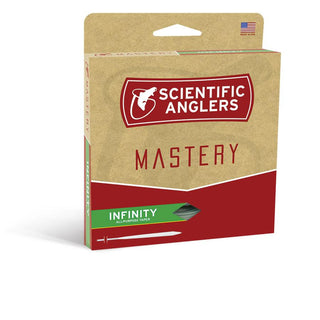
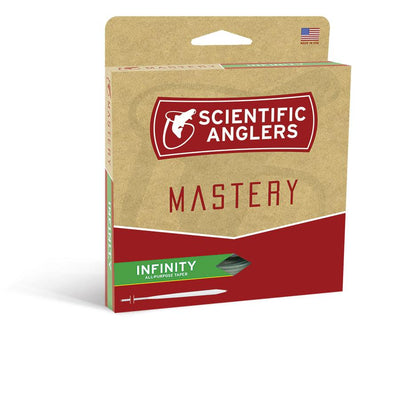
Scientific Anglers Mastery Infinity Fly Line
If your rod feels stiff or "dead"
Scientific Anglers Mastery Infinity Fly Line
$79.95

If you have a newer, stiffer rod that doesn't seem to load right with a regular line, this is the upgrade. Built half-size heavy so the rod has something to bend against. Casts everything from dries to small streamers.

Shop Mastery Infinity →
Fly Line Picker

Let us help you pick the right fly line.

Three questions. Tailored to your rod and how you fish.

Question 1 of 3

What are you fishing for?

Not sure what you fish for? Most one-rod anglers pick Trout & freshwater → All-around. Or scroll down to By fishing type for more depth.
Question 2 of 3

What style of fishing?

Question 3 of 3 · Rod weight

What weight is your rod?

Look above the cork grip — it says something like "5wt" or "8 weight."

Last question · Rod action

How does your rod feel?

Spey & two-handed

Tell us your rod. We'll match the right line.

Spey lines are rod-specific — two rods of the same weight can want grain weights 50+ apart. We use the Scientific Anglers spey chart (1,194 rods, 23 manufacturers) to give you a real recommendation, not a guess.

Step 1 — Diagnosis

Is your old line actually done?

Most fly lines have 200–300 quality fishing days in them. After that, the taper and coating quietly fall off whether the line looks bad or not. Here's what to look for.

i.
The tip is sinking
A floating line that won't keep its tip up means the coating has absorbed water and lost its hydrophobic properties.
ii.
Cracks & memory
Visible cracks in the coating, or coils that won't stretch out after a few hard pulls.
iii.
Sticky through guides
If your line drags rather than shoots, the coating's slickness is gone. SA Revive can extend a line, but only so far.
iv.
2–3 seasons in
Even a clean-looking line that's been fished hard for three seasons is past its prime.
!
Quick field test — roll cast 25 feet of line without false casting. If the rod struggles to load and the loop won't unroll cleanly, either the line is wrong for the rod, or it's worn out. Both mean it's time for a new one.
Step 2 — Match the rod

Rod action drives the taper and grain weight.

The action of your rod — slow, medium-fast, or fast — tells you whether to fish a true-to-weight line, a half-size heavy, or a full-size heavy. Get this part right and the rest of the choice falls into place.

Slow / Moderate

Traditional, glass, classic graphite

Glass rods, older Sage trout rods, lighter Orvis Superfine, Winston traditional tapers, Hardy Marksman
→ Use a true-to-weight line, long front taper
These rods load deeply on their own. A heavy line will overload them and the cast collapses. Look for lines built to standard AFFTA grain weights — measured by the weight of the first 30 feet — with a long, soft front taper for delicate presentations.
Medium-fast

The "do-everything" trout rod

Sage Sonic, Orvis Recon, Echo Carbon XL, T&T Avantt, most rods sold today
→ True-to-weight or half-size heavy both work
The easiest match. Most modern weight-forward lines are designed exactly for this rod. Choose your taper by fishing type (Step 3) and you're set.
Fast

Modern fast-action rods

Sage R8 Core, Helios, Asquith, Igniter, Method, Loomis NRX+, Echo Boost
→ Go half-size heavy
These rods need more grain weight in the belly to actually load at fishing distance (20–35 ft, where you make most casts). True-to-weight lines on a fast rod feel "dead" — like the rod isn't doing anything. A half-size heavy line gives the rod something to bend against.
Very Fast + Heavy Bug

Cannons & heavy-rig fishing

Fast rods + weighted streamer rigs, big indicators with split shot, wind, oversized bugs
→ Go full-size heavy
When you're chucking weighted streamer rigs, big bobbers and split shot, or fighting wind, you want power. Full-size heavy lines push their grain weight up a full size (a 5-weight rod gets a 6-weight line) so the belly carries enough mass to turn over anything you tie on.
Step 3 — Match the fishing

Rod action sets the weight. Fishing type sets the taper.

Same 5-weight rod, three different fishing situations, three different lines. Here's how to think about each one. Recommendations link to in-stock products.

Freshwater · Coldwater
Trout & technical freshwater
All-purpose trout
Dry-dropper & indicator
The most-fished category, period. One fly, two flies, small indicator.

The most-fished category at the shop. Slightly more power up front than a pure dry-fly line, but presentable enough for a #16 PMD. Handles two flies, a small indicator, and a tippet ring without piling up.

Presentation
Dries & spring creek
Pale tippet, technical fish, drag-free drifts at distance.

Long head, long front taper, true-to-weight. You want delicacy on the cast and the ability to mend at 40 ft without disturbing the seam you're fishing.

Power
Heavy nymph rigs & indicators
Big indicator, split shot, two weighted nymphs, sometimes a streamer dropper.

Short, aggressive front taper. Half-size or full-size heavy. The line needs to turn over a thingamabobber, two flies, and shot without piling — true-to-weight lines just won't.

Specialty
Euro / competition nymph
Tight-line technique with long leader, sighter, and Perdigons.

A dedicated thin-diameter mono-core comp line. Standard fly lines won't sink through the column or transmit takes the way a euro setup needs — and the diameter matters as much as the weight.

Streamers — floating
Floating streamer line
Surface and shallow strips, working banks, dead-drifting articulated bugs.

An overweighted front taper that turns big flies over without false-casting six times. Floating version keeps you on top for visible eats and dead drift work.

Streamers — sinking
Sink tip & full sinking
Browns down deep, big rivers and tailwaters, fish that won't come up.

Sink tip for 2–6 ft down. Type 6 or full sinking when fish are 8+ ft down or you're swinging through fast water. The Cortland Galloup-collab lines are the most refined streamer-specific lines on the market right now.

Small water
Spring creeks & headwaters
Short casts, tight quarters, lots of small dries.

A short-headed line built to load inside 20 ft. Most trout lines are designed for 25–50 ft casts; small water needs a line that's working as soon as you flick it off the tip-top.

Freshwater · Stillwater
Lakes & reservoirs
Chironomid / surface
Stillwater floating
Indicator work with chironomids, callibaetis on top, dries to risers.

A dedicated stillwater floater has a longer rear taper to suspend an indicator from distance and enough mass up front for chironomid leaders rigged 12+ feet deep.

Subsurface
Intermediate & sinking
Leeches, balanced flies, callibaetis emergers, fish in the column.

If you only own one stillwater line, make it a clear intermediate. It slips below the wind chop and into the column where the fish actually are. Pair it with a sinking line for deeper water.

Freshwater · Warmwater
Bass, pike, musky & carp
Bass — surface
Topwater poppers & deer hair bugs
Largemouth on poppers, smallmouth on hoppers, the morning bite.

You need a line that turns over wind-resistant deer-hair bugs and poppers without false-casting six times. Short, aggressive front taper. Full-size heavy on a 6 or 7 weight rod.

Pike & musky
Big-fly fishing on a 9–10 wt
8–12" articulated streamers, apex freshwater predators.

Compact head, heavy front-end mass, low-stretch core. Pike and musky lines exist to turn over flies that weigh more than your tippet spool. A trout line will not do this job. Don't try.

Carp
Sight-fishing the freshwater "flats"
Spooky fish, weighted hybrid flies, short accurate casts in shallow water.

Carp fishing rewards a flats-style line on a 6 or 7 weight. Short head for quick loads at 25 ft, supple coating, stealthy color. Don't use a tropical-coated line for cool-morning carp. It will stiffen up like wire.

Specialty
Night fishing — big browns & mousing
After-dark presentations to big trout, mouse and large fly patterns.

The Magnum Glow is a specialty line. Half-size heavy aggressive taper with a glow tip you charge with a headlamp. Lets you see your line in pitch dark without spooking fish. Worth owning if you fish nights for big browns.

Saltwater · Flats & Big Game
Flats fishing & tropical saltwater
The classic flat
Bonefish
Bahamas, Belize, Florida Keys. Spooky fish, long leaders, 30–60 ft casts.

Long head, long back taper for accurate presentations to spotted fish. Tropical coating that stays supple in 90° heat and resists salt buildup. The new Magnitude clear-tip lines are worth a hard look for pressured fish.

Quick shots
Redfish & cruiser flats
Louisiana marshes, Florida Gulf Coast, Texas. Short casts at 20–40 ft.

Shorter, more aggressive front taper than a bonefish line — you want to turn over a heavy crab or spoon fly with one false cast. Louisiana redfish fishing especially rewards lines built for quick, close-in shots from the bow.

The toughest fish
Permit
Belize, Mexico, the Keys. The fish that ate at 60 ft after refusing six casts.

Low-stretch core for solid hooksets at distance. Front-end mass to deliver heavy crab patterns into wind. Quiet entry — permit spook off a noisy line splash from 30 ft. Purpose-built lines pay off here.

Big game
Tarpon — migratory & resident
Florida Keys, Belize, Costa Rica. 50–150 lb fish on 11–12 weight rods.

Compact head, hard tropical coating, low-stretch core for crushing hooksets through a tarpon's bony mouth. Most tarpon lines are full-size heavy by design — you're loading a fast 12 wt with the line up and out, not at 25 ft.

Big tropical
GT, billfish & big jungle predators
Christmas Island, Seychelles, Amazon — peacock bass, GT, dorado, payara.

Heaviest grain windows, hardest tropical coatings, the most aggressive front tapers in the game. 12+ wt lines built to throw 8" baitfish patterns into 25 mph wind. Get the right line or you're casting all day for nothing.

All-around saltwater
General tropical / first trip
First trip to the salt, or one line for multiple species in a week.

Heading to Belize without knowing yet whether you'll get more bonefish, tarpon, or jack shots? A Grand Slam-class line is your single best answer. Built specifically to handle the bonefish-permit-tarpon trifecta on the same trip — multi-species versatility without specializing for any one. Tropical coating, balanced head, low-stretch core.

Two-hand & Switch
Spey, swing & integrated heads
Sink tips & heavy flies
Skagit systems
Steelhead, salmon, swung trout streamers with weighted flies.

Short, powerful heads built to turn over sink tips and weighted flies. Compact head + appropriate MOW tip + running line. Integrated lines (head + running line in one) keep setup simple; shooting heads give you flexibility to swap.

Swung wets & soft hackles
Scandi & surface presentations
Atlantic salmon traditions, dry-line steelhead, swung trout wets.

Longer head, softer presentation, for unweighted or lightly-weighted flies on the swing. The Scandi counterpoint to Skagit — built for dries and wets on a tight line without disturbing the water.

Top of the case

The lines we put on the most reels.

We spool hundreds of reels every season. These are the lines we recommend most when someone hands us a rod and asks "what should I run on this?"
Premier Rio Gold Fly Line
№ 1 — most spooled
$99.99
The line we sell more of than any other, by a long way. Long head, long rear taper, SlickCast coating — built half-size heavy, which fits most modern 4–6 wt rods perfectly. If you fish one trout rod, this is the line.
Shop now →
Cortland 444 Peach Fly Line
№ 2 — best value
$69.95
The American classic. True-to-weight, supple coating, lays out like silk on medium-action rods. We sell two: the standard WF version and the Double Taper (same line, more reach mending). Same price, same coating — pick by how you fish.
Shop now →
Scientific Anglers Mastery Infinity Fly Line
№ 3 — workhorse trout
$79.95
SA's most-sold trout line at our shop. The Infinity taper is half-size heavy, presents dries well, turns over a dry-dropper rig without complaint. Mastery tier = Amplitude taper with a simpler coating at $20–50 less.
Shop now →
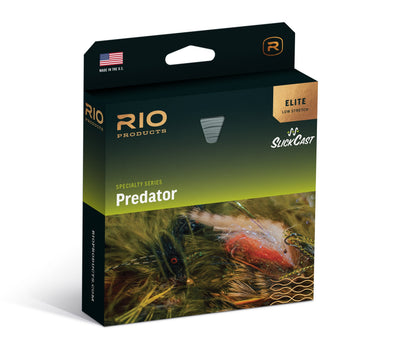
Rio Elite Predator Fly Line
№ 4 — streamers
$129.99
The serious streamer line. Aggressive front taper, ConnectCore Plus low-stretch core for solid strip sets, turns over articulated patterns without false casting all day. Our top-selling streamer line — the customers who fish streamers buy this one.
Shop now →
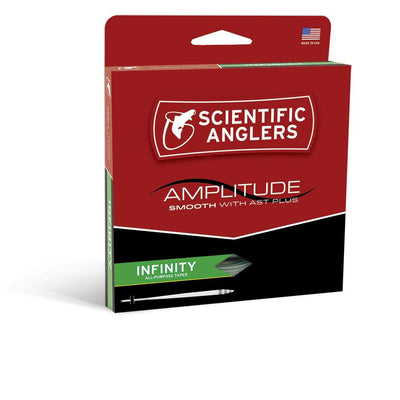
Scientific Anglers Amplitude Smooth Infinity Fly Line
№ 5 — fast rods
$99.95
Half-size heavy. The line we hand the angler whose fast-action rod isn't loading right. Slicker than Mastery, low-stretch core, casts everything from #20 dries to small streamers. The single most versatile trout line we sell on a modern rod.
Shop now →
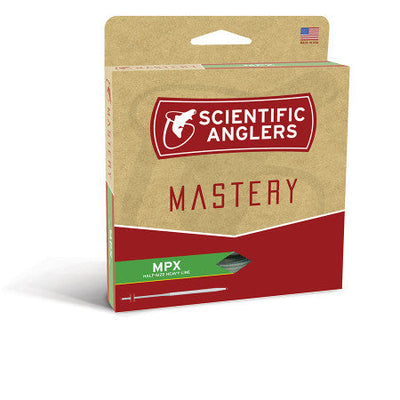
Scientific Anglers Mastery MPX Taper Fly Line
№ 6 — heavier rigs
$79.95
The aggressive half-size heavy MPX taper at Mastery price. Built for nymphing rigs, dry-droppers, and turning over weighted flies on medium-fast rods. When the Gold taper isn't punching through wind or heavy rigs, this is the upgrade.
Shop now →
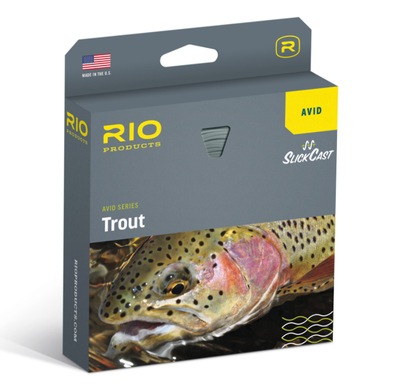
Rio Avid Gold Fly Line
№ 7 — budget all-around
$69.99
RIO's entry-tier Gold taper. Same general Gold taper as our #1 pick at $30 less. Modern coating, solid all-around performance — beats every no-name line at this price point.
Shop now →
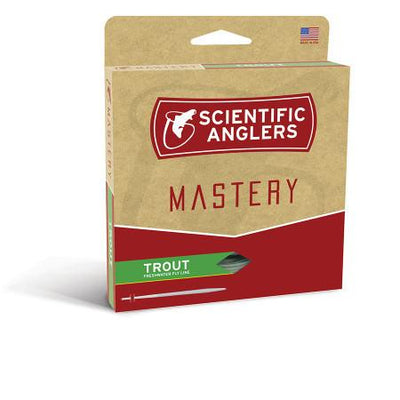
Scientific Anglers Mastery Trout Taper Fly Line
№ 8 — classic trout taper
$79.95
The traditional trout taper at the heart of SA's lineup. True-to-weight (not half-size heavy), long front taper, presents dries beautifully on medium and medium-fast rods. The classic alternative to the Infinity taper for anglers who like a more traditional feel.
Shop now →
Worth knowing about

What's new for 2026.

A handful of 2026 releases are worth knowing about if you're spooling up a new reel this year.
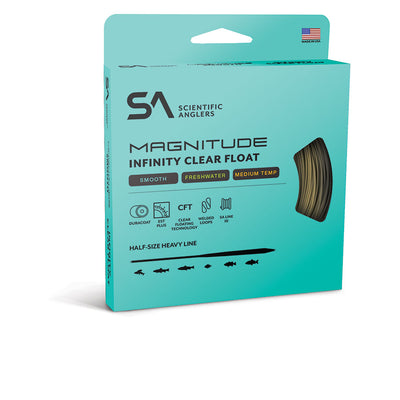
Scientific Anglers Magnitude Smooth Infinity Clear Float Head Fly Line
New family — Scientific Anglers
$149.95
SA's all-new clear-tip and full-clear floating family for 2026. Worth a hard look on spooky tailwater, stillwater, and pressured flats. Available in Infinity, Trout Expert, and Grand Slam tapers, smooth or textured.
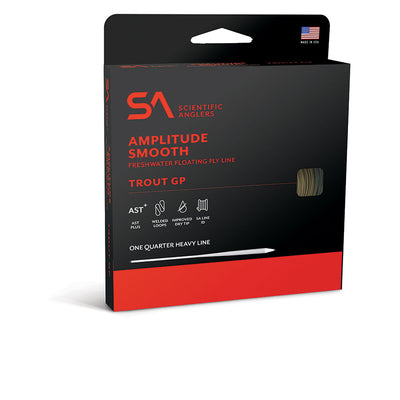
Scientific Anglers Amplitude Smooth Trout GP Fly Line
New tapers — Scientific Anglers
$99.99
SA retired the old Trout and Standard tapers. Trout GP runs half-size heavy for medium-fast rods — very Gold-like in feel. Trout Expert is true-to-weight with a 10-ft front taper. The most refined presentation line SA makes.
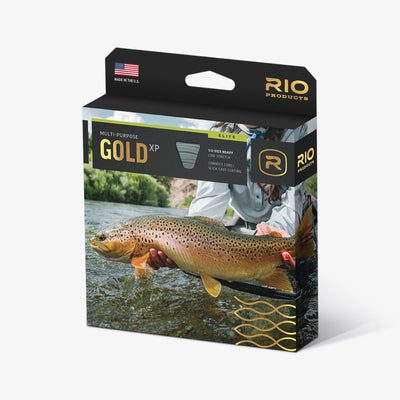
Rio Elite Gold XP Fly Line
Updated — RIO
$129.99
Half-size heavy version of the Elite Gold. Built for fast trout rods (R8 Core, Sonic, Igniter). Same Gold taper anglers know and love, just with more grain weight up front to load fast rods at fishing distance. Modern slickest-coating treatment.

Still have a question? Call the shop.

Real recommendations from the people who line up reels every day. Tell us your rod, what you fish for, and where — we'll dial in the right line. Phone is fastest, email works too.

Mon–Sat 9am–5pm Mountain Time · Closed Sunday

Common questions

The questions we get asked most.

How often should I replace my fly line?
For most anglers, every 2–3 seasons of regular use. If you're fishing 100+ days a year, every season. Signs it's done: the tip sinks, the coating cracks, memory coils won't stretch out, or it's gotten sticky through the guides. Even a clean-looking line that's been fished hard for three seasons is past its prime.
What's the difference between Elite and Premier RIO lines?
Same taper design. The Elite series adds ConnectCore Plus (RIO's low-stretch core) for better feel and faster hooksets, plus their slickest SlickCast coating. The Premier series uses a different coating and a standard core, saves about $30. For most anglers the Premier is plenty; serious anglers and guides tend to prefer the Elite.
Amplitude vs Mastery vs Frequency — what's the difference?
SA's three tiers. Amplitude is the top tier — best coating slickness, low-stretch core, comes smooth or textured. Mastery is the middle tier — same tapers but a simpler coating, around $30 less. Frequency is the entry tier at $59.95 — same general tapers, supple cold-water coating, no low-stretch core. The 2026 Magnitude lines sit above Amplitude as a new flagship with clear sections.
Should I overline my rod by a half size?
Depends on the rod's action. Fast-action rods almost always cast better with a half-size heavy line — most modern lines like the Elite Gold, Amplitude MPX, Amplitude Infinity, and Cortland Finesse Trout II are already built half-size heavy for this reason. Medium-action rods are best with a true-to-weight line. If your fast rod feels "dead," go up half a size.
Coldwater vs tropical lines — what's the difference?
Coating chemistry. Tropical lines (saltwater, summer carp, jungle fishing) have a harder coating that stays supple in 90°+ heat. Coldwater lines are softer — they cast beautifully in 50° water but turn into limp pasta in the tropics. Fishing a coldwater line in Belize is the most common mistake on a first saltwater trip. Use the right one for the climate.
Do textured lines wear out faster?
They can wear on rod guides if you're not careful, and the texture itself shows wear sooner than a smooth coating. The trade-off: textured lines float higher, shoot farther, and pick up off the water cleaner. SA's textured Amplitude pattern is much friendlier to guides than older textured lines. Our take: if you fish a lot and want maximum performance, textured is worth it. If you fish 20–30 days a year, smooth is fine.
Will you put the line on my reel?
Yes — free with any line purchase. Just note "please spool on my reel" in the order comments, ship the reel to us, and we'll send it back ready to fish. We'll add the right backing and a quality leader at no extra charge.
What about a budget alternative?
The SA Frequency Trout GP at $59.95 and the Cortland Modern Trout at $69.95 are both legitimate performers — proper modern tapers, just simpler coatings than the flagship lines. The biggest upgrade most anglers can make to their setup is moving from a no-name line to a real trout-specific taper at any price point.